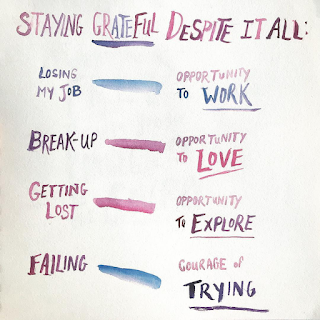
Wednesday, 24 November 2021
Gratitude
Saturday, 2 October 2021
Out-Witting Cancer exhibition
This new exhibition is in 'real life' in London with some of it online - see more - particularly the videos here: https://www.crick.ac.uk/whats-on/exhibitions/outwitting-cancer
I've only had a chance to look at the online info and it is very much a reflection of the current conventional approach - and gives some great insights to where research is going and how they are researching some cancers.
It does also just touch on broader topics like diet but not in any depth or, in my view, providing any useful info. However several of the videos are interviews with Karen Vousden from the Francis Crick Institute and Chief Scientist, Cancer Research UK - she studies the influence of the body’s metabolism – how cells change food into energy – on the development of cancer cells. She rightly points out that we do not understand
risk well, for example she suggests one sausage a week 'almost certainly' won't give you cancer but if people are told that eating a sausage causes cancer then they will not trust other messages. Indeed sensationalising risks are very unhelpful.
However we also don't know fully the impact of food on cancers; there is still loads to learn. So I think the comments around food might suggest to some not to worry too much about bacon, alcohol etc in moderation.....I certainly agree worry is counter productive but also think that we still need some care around changing the way we eat. There seemed to be no mention - maybe I missed it - about what we do need to be eating...people living with cancer (and indeed many other conditions) are long overdue advice and support around good nutrition....not to give it can only reinforce perceptions that many of us are eating well...the evidence however suggests otherwise. See my last blog on nutrition.
Similarly the info about treatment approaches are all conventional - with a focus on surgery, radiotherapy, chemotherapy and immunotherapy. As we know there is a whole world of lifestyle and complimentary treatments/approaches that are peer-reviewed and will impact beneficially on people living with cancer.
Friday, 24 September 2021
Keto, Low Carb or what for prostate cancer?
This post is not going to attempt to answer the question about which diet to follow...indeed it is so individual...the science is still in early days but it is clear that nutrition can play a key role. There are a huge number of podcasts and webinars available covering the growing research - earlier this year we had a Nutritional Congress at Yes to Life (see here) and it was totally fascinating to see how this field is growing...but all this info can be confusing...
One key question is around fats - do they feed prostate cancer as the work of Jane McLelland suggests? In particular she highlights saturated fats that may be a key problem element - see more in a previous blog here. However there are many who argue that some saturated fat is important for the body. So where does that leave keto.....
I liked the latest podcast with Robin Daly, Founder and Chairman of Yes to Life, talking with oncologist, Penny Kechagioglou, Senior NHS Clinical Oncologist to nutritional therapist Carol Grainger. She talks about the impact diet may have on treatment - and warns about the dangers of taking a keto diet - we need to know what keto means as it is so widely used for different approaches - and can be dangerous. However new research shows that the right kind of keto diet with low carbs, ie only 20 grams a day, has shown cholesterol improved and prostate cancer PSA doubling time lessened significantly. Hear more on Podcast number 6 at: https://yestolife.org.uk/cancertalk-podcasts/
Back in 2007 and earlier we've had indications that low carb may help - so it is great that more evidence is finally emerging - we still need more research to help us understand what that looks like.....and for many of us support would be needed if we are to cut carbs to only 20grams a day. Certainly nutritionists warn that considerable care is needed if you are to embark on such a plan.
Update 9.2.25: Useful article: Is the Keto Diet bad for your cholesterol levels?: https://embracingnutrition.co.uk/is-keto-bad-for-cholesterol-levels/
And here is Cancer Choices with their analysis of keto diet effectiveness - I like how they score treatments/approaches - doing the work for us - but still you need to do your own work too - I haven't always agreed with their scoring! See: https://cancerchoices.org/therapy/ketogenic-diet/
Thursday, 16 September 2021
Where to start? Nutrition, fear and exercise?
Sunday, 5 September 2021
The Alkaline Water Myth?
When I was first diagnosed with cancer several people recommended I get an expensive alkaline water machine including a former GP. I spoke to suppliers at a Festival and they were convincing. There were many claims also on the internet about how alkaline water can help weight loss, detoxification, pH balance, bone health, hydration, heart health, energy levels and even claims around cancer - it is said that cancer cells can no longer develop in an alkaline environment.
I bought pH strips for a few quid to test my urine, thinking this might help inform my decision - but I had nagging doubts. I couldn't see how it could work.
The pH scale is how you measure acidity; zero being the most acidic and 14 being the most alkaline. A pH level of 7 is neither acidic nor alkaline. The human body apparently has a controlled pH level of about 7.4 - but levels vary in certain parts of the body. The stomach needs to be acidic between 1.35 and 3.5 to break down food and it seems urine is also naturally acidic.
It seems to me if a person drinks alkaline water it may increase pH, but only very temporarily - as it goes through the stomach it is surely impacted by digestive juices so that the contents all have the same pH? Since most uptake of water happens in the intestines, the water that enters the bloodstream will have the pH of the small intestine digestive juices rather than the pH present at the time of drinking. So how can alkaline water impact?
So it seems consuming alkaline water has little effect on changing the pH of the blood, but a few studies have also looked at the effect of alkaline water or diet on the development or progression of cancer. Very Well Health report on 'a large systematic review (combining 252 abstracts) looking at alkaline water and cancer' that 'there did not appear to be any evidence that consuming this water had any effect on the initiation (development) or treatment (progression) of cancer. In only one of the studies was any significant association found, and that, in turn, was slight (between pH and bladder cancer)....A Finnish study looking specifically at men with bladder cancer and an alkaline diet, however, found that a lower urine pH (reflective of the alkaline measures) did not significantly reduce the risk of developing bladder cancer.'
Tuesday, 31 August 2021
Last chance to submit to Gloucester City's Commission to Review Race Relations
![]() |
| Click to enlarge or go to link here |
Monday, 12 July 2021
Impact of radiotherapy 15 months on
![]() |
| Finishing Radiotherapy March 2020 |
Well its been nearly a couple of months since my last blog on this site - a collection of reasons plus busy times - it has also now been 15 months since finishing radiotherapy - and also deciding to finish the hormone treatment - so it seemed a good place to review where I am at. Some might also be interested in my previous blogs on radiotherapy by clicking on the tag.I guess it is worth saying that although the radiotherapy was aimed at getting rid of prostate cancer we don’t know whether that is the case - medical teams talk instead of being ‘in remission’; in other words no sign of cancer. Also no doctor can say for certain whether your cancer will come back. Each cancer is different and the success of your treatment will depend on many things.
PSA results
I’ve had three PSA tests at 3 month intervals, 0.4 then 0.3 then 0.3 a couple of weeks ago. This doesn’t mean a lot at the moment and it could possibly fall more for up to two years after radiotherapy although it looks like it has possibly stabilised? If it rises more than 2.0 then that is when we have to take action. You can see more about PSA tests and bounces after radiotherapy in my blog where I talk about why I stopped hormone treatment here.
Side-effects
![]() |
| Hoping dance will be poss again soon! |
1. Exercise. Like muscle, bone gets stronger when you use it. The best moves for bones are weight-bearing exercises that force your body to work against gravity. That includes walking, stair climbing, dancing, and lifting weights. I do all those except the weights.
2. Diet. High-calcium foods outlined on most websites include:
5. Supplements. There are various lists online of supplements that can help, but I am very cautious about suggesting any as it is so individual. We also need to be aware that some will interact with other aspects of our health. In the past for example I have taken ashwaganda - a wonderful widely used Ayurvedic herb to reduce stress and so much more - however after taking for a while I discovered that some practitioners view it as oestrogenic - not something someone with prostate cancer wants to be taking. So do do your research!
![]() |
| Cartoon by Russ after reading this blog |
My own experience is that levels of tiredness are greater now than before the hormone and radiotherapy treatment. Not by any means dreadful but certainly not back to normal. Of course it is hard to unpick cause and effect as we’ve also had a very strange last 18 months with Covid. I was also made voluntarily redundant from a job I loved and despite having a new role and opportunities, that clearly does have an impact on health.
'Making skillful decisions at a glance'
'Making skillful decisions at a glance' is the title of a post by Cancer Choices. It is a useful start to anyone diagnosed with canc...
-
Local artist Russ I should start by saying supplements support healing and can be an important part but (for me) they need to be part of...
-
Well I used to participate in these ‘Blog Hops’ with my last blog, but haven’t done so with this one until now. The idea from Nancy at Na...
-
Oh my... this book so resonated with me and was a great read. I learnt lots more about cancer and it's helping me rethink my approach -...