Thursday, 6 January 2022

A look at Environmental Toxins

Today it's a look at Environmental Toxins - of course people have written books on this topic and often books on aspects of this - so it is more of an introduction. As regular readers will know I've been helping a few hours a week to establish a series of Integrative Health Forums and some of the groups. What has been fascinating is that I've been able to join in some of the discussions - this blog is based a lot on my Wigwam Group blog here and their discussion that looked at environmental toxins.... 


Since the 1970s more than 78,000 chemicals have been approved for commercial use. Only 1,000 have been formally examined and considered for their carcinogenic potential - and of those the World Health Organisation consider 120 as ‘known’ carcinogens, 81 as probable carcinogens and 299 as possible carcinogens (i).

We know little about the other thousands of chemicals. What is the impact of each of those chemicals on one another? Do some change our internal biology that could lead to the onset of diseases? What is the accumulative effect?

The average adult uses 9 personal care products a day with 126 unique chemical ingredients (ii)! One in five adults are exposed to all the top seven carcinogenic impurities found in personal care products including formaldehyde. Women are hit harder with an average of 168 chemicals every day. 

Indeed many everyday products could be a concern - and their seem to be regular media stories raising concerns; in 2016 Johnson and Johnson’s baby powder and other talc products for feminine hygiene were determined by a Missouri state court to cause ovarian cancer (update 6/9/22; Talc is to be withdrawn - see here). Last year 75 hand sanitiser brands were recalled in the States as they contained toxic ingredients. We've also just seen last month dozens of Pantene and Herbal Essences dry shampoo sprays recalled for a cancer-causing chemical (see here).
There are many examples of papers pointing to the impact of chemicals that are widely being used. A PubMed paper for example, from November 2020 looking at hand sanitisers notes that "it has been observed that overuse of alcohol based hand sanitizer results antimicrobial resistance, which can put more burdens on already struggling healthcare professionals. Repeated exposure of disinfectant, antibiotics or other genotoxic chemicals to microbes tends them to get mutations through natural process that make them resistant to survive from repeated use of hand sanitizer".
I remember a ground-breaking study in 2004 that still shocks; the Environmental Working Group commissioned five laboratories to examine the umbilical cord blood from ten babies and found more than 200 chemicals in each newborn. They report that they would have found more if they had tested for more.
In a blog back in June 2009 a blood test came back suggesting that my cancer may have been caused by a chemical found in moth-proofing carpets, air-fresheners and toilet bowl blocks - see that blog here. As I note then it is possible that that played a role in my cancer but I think it is far more complex than that.
It is easy to become paralysed by the overwhelming number of possible toxins in our environment. However we can become informed and thoughtful consumers. The list of chemicals is likely to grow and we are unlikely to know what impact many of them will have on ourselves. Many of us have adopted a precautionary principle so that until a chemical has been found to be harmless we will try not to use it. One example of this is if a product has the word ‘fragrance’ it may well have endocrine disrupters in it - so we just don’t use it.Toxins role in Cancer?
Professors Rosalie David and Michael Zimmerman looked at cancer prevalence by reviewing the remains of Egyptian mummies and data gathered since then. They concluded that “Cancer certainly existed in antiquity…but the rarity of that diagnosis in the tens of thousands of skeletal remains and thousands of mummies that have been examined supports our view that most cancers in our modern populations are due to man-made factors”.
There is increasing evidence for the impact of environmental factors on cancer. In a Nature article in Jan 2016 it was estimated 70-90% of cancers are caused by diet, lifestyle and environmental factors. While a Pubmed article (iv) by Schneiderman found 80% of cancer is related to the environment. Cohen and Jefferies in their great book ‘Anti-Cancer Living’, say research shows diet and sedentary behaviour in the US is around 30-35%, tobacco 30% worldwide, viral infections 15%, radiation up to 10%, alcohol 3.5%, but they acknowledge that environmental toxins are too hard to estimate.
Our homes and lives are certainly full of chemicals - and it is true that some of those will have an impact on our health. It is also true that we can’t realistically avoid them all but we can limit exposure.

Nutrition

There are varying reports about the possible impact of pesticides in our food. Amazingly we can lower pesticide levels in washed produce by 80% by avoiding the 12 most contaminated fruits and veg (most years these include apples, potatoes, tomatoes and strawberries). While the Journal of Environmental Research found 7 days on an organic diet led to dialkyl phosphate pesticide (DAP) levels dropping by 89% in urinary secretion. DAPs make up 70 to 80% of organophosphate pesticides.
There are also concerns regarding other foods including some processed foods, dairy, meat and more. This is a topic for another blog.
Of course what you eat can also help detox - foods like beets, lemon, chlorella, spirulina, broccoli sprouts, milk thistle and more - but again that is another blog.
Wigwammer thoughts

In the Wigwam group people shared various thoughts and ideas. 
To give a taste here are some of them; 
vinegar for cleaning, glass storage for food (as opposed to plastic) but also to avoid tinned food that has BPA liners, replacing toilet bleach with bicarbonate of soda, purifying water, getting an infrared sauna, being aware of Electromagnetic Fields (EMFs), mercury in food and fillings, some medications and treatments/screenings, radon, asbestos and more. 

Phew - you can see why this could be totally overwhelming and lead to panic.....but also crucial to remember the impact of stress! Over four years since my diagnosis and I am still learning and still trying to reduce the impact of chemicals on my immune system.
Previous Forum looked at Environmental Toxins
Leyla Mouddan, a Digestive Health educator and previously President of Association of Naturopathic Practitioners looked at a very basic framework for the everyday changes that increase immunity, exploring how our homes could be poisoning us - and what we can do about it - to access you need to sign up (free) to get access: https://www.wigwam.org.uk/podcast-and-videos

Air quality

There are over 36,000 premature deaths in the UK linked with air pollution (v) - more than from obesity or alcohol. The UK Government has breached EU limits on air quality and been found guilty twice in court. Cancer Research UK estimate 3,600 cases of cancer due to air pollution (vi).
One of the more common pollutants is benzene; it is known to cause cancer and is found in many products and places including cigarettes, glues, solvents, paints, pesticides, airports and petrol stations. Since learning this I’ve been far more careful now to avoid breathing in fumes when I fill up with petrol!
Update 11.08.22: "Researchers say they have cracked how air pollution leads to cancer, in a discovery that completely transforms our understanding of how tumours arise" - see https://www.bbc.co.uk/news/health-62797777

Outside air is one thing but inside our homes and work places can also be polluted and in many cases can be more polluted than outside. 

Indoor Air Pollution
This list is some from the one by Tony Davies from one of the Wigwam groups;

There is no safe level of tobacco consumption, a major cause of cancer, do not allow it indoors.

Open windows to air the home for a few minutes daily, do NOT use ‘air fresheners’ that can contain toxic chemicals eg: volatile organic compounds (VOCs) (respiratory irritants), benzene, formaldehyde, toluene, m,p-xylene, phthalates, and more.

The British Lung Foundation advise NOT to burn scented candles and incense in a confined space as they let off VOCs and other pollutants eg formaldehydes (linked to cancer);


Many plants produce a lot of oxygen and some remove toxins from the air - spider plants have been shown to remove formaldehydes and other toxins – all good to have in the bedroom. One of the Wigwam group sent this re houseplants that help clean air: “according to NASA Snake plants are one of the best houseplants for absorbing airborne toxins, including formaldehyde, nitrogen oxide, benzene, xylene and trichloroethylene. There are many websites with lists of plants that are good - here’s one: https://www.cancerdefeated.com/are-your-houseplants-%E2%80%A8really-purifying-your-air/ “

Keep humidity below 55% (hygrometers to measure this are cheap and readily available) to minimise chance of mould growth eg Aspergillus (black) which affects lungs and breathing - not something you want if going through chemo or have any form of lung problems. 
If mould does start to grow chlorine based bleach is itself a Xenoestrogen and thus carcinogenic and only kills spores on non-porous surfaces. Use vinegar, tea tree oil, hydrogen peroxide and then baking soda.

Try to avoid drying clothes on radiators, a significant source of humidity. Best practice is to dry them outside, otherwise use a tumble drier that vents or collects moisture.


A lot of this seems to be common sense but I think we can too easily get seduced into seeing chemicals as an easy answer.


Notes
(i) ‘Anti Cancer Living’ by Dr Lorenzo Cohen and Alison Jefferies (2018)(ii) www.ewg.org(iii) https://www.nature.com/articles/nrc2914-c3(iv) https://pubmed.ncbi.nlm.nih.gov/642654/(v) https://friendsoftheearth.uk/clean-air(vi) https://www.cancerresearchuk.org/about-cancer/causes-of-cancer/air-pollution-radon-gas-and-cancer/how-can-air-pollution-cause-cancer and see BBC report: http://www.bbc.co.uk/news/health-2456444

Sunday, 5 December 2021

A label is more than a label

We have talked lots in past about the placebo effect...the power of the mind...well I loved hearing about this test where participants had their hormone levels measured before and after consuming different types of milkshakes. One of the shakes was labelled as huge in calories - a super sized indulgent shake while the other was labelled as fat free and guilt free.

It was exactly the same milk shake. Yet the results show that the participants hormone levels reflected what they believed to have just consumed and were wildly different depending on which milkshake they had. This is more evidence that our mindset can meaningfully impact on our physiology. You can check out the research by Alia Crum et al at: https://pubmed.ncbi.nlm.nih.gov/21574706/


Wednesday, 24 November 2021

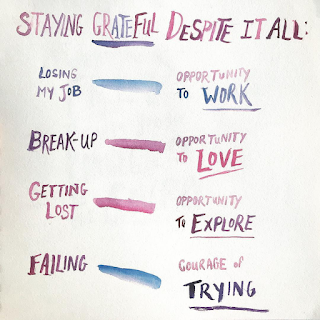
Gratitude

Research has shown how important the role of gratitude can be...increasing our resilience, directly impacting on our health (like lowering blood pressure and increasing immunity), opening up new opportunities, improved relationships and so much more.

A while back I came across Oliver Sacks' published essays before his death that were collected in GratitudeThis particular quote so resonates and couldn't resist posting here: “I cannot pretend I am without fear. But my predominant feeling is one of gratitude. I have loved and been loved; I have been given much and I have given something in return; I have read and travelled and thought and written. I have had an intercourse with the world, the special intercourse of writers and readers. Above all, I have been a sentient being, a thinking animal, on this beautiful planet, and that in itself has been an enormous privilege and adventure.”

Image from the amazing Rukmini Poddar who wrote: "Choosing gratitude is not my default mode by a long shot. Really, being grateful is not something that comes easy for me and it’s a moment by moment choice. But having had a heavy heart the last two weeks is teaching me that there is always an option of being grateful despite it all. And that’s empowering.

Rukmini Poddar is an artist, designer, and educator. Her passion lies at the intersection of emotional wellness and creative storytelling. See more at: https://dearruksi.com

Saturday, 2 October 2021

Out-Witting Cancer exhibition


This new exhibition is in 'real life' in London with some of it online - see more - particularly the videos here: https://www.crick.ac.uk/whats-on/exhibitions/outwitting-cancer

I've only had a chance to look at the online info and it is very much a reflection of the current conventional approach - and gives some great insights to where research is going and how they are researching some cancers.

It does also just touch on broader topics like diet but not in any depth or, in my view, providing any useful info. However several of the videos are interviews with Karen Vousden from the Francis Crick Institute and Chief Scientist, Cancer Research UK - she studies the influence of the body’s metabolism – how cells change food into energy – on the development of cancer cells. She rightly points out that we do not understand
risk well, for example she suggests one sausage a week 'almost certainly' won't give you cancer but if people are told that eating a sausage causes cancer then they will not trust other messages. Indeed sensationalising risks are very 
unhelpful.

However we also don't know fully the impact of food on cancers; there is still loads to learn. So I think the comments around food might suggest to some not to worry too much about bacon, alcohol etc in moderation.....I certainly agree worry is counter productive but also think that we still need some care around changing the way we eat. There seemed to be no mention - maybe I missed it - about what we do need to be eating...people living with cancer (and indeed many other conditions) are long overdue advice and support around good nutrition....not to give it can only reinforce perceptions that many of us are eating well...the evidence however suggests otherwise. See my last blog on nutrition.

Similarly the info about treatment approaches are all conventional - with a focus on surgery, radiotherapy, chemotherapy and immunotherapy. As we know there is a whole world of lifestyle and complimentary treatments/approaches that are peer-reviewed and will impact beneficially on people living with cancer.


Friday, 24 September 2021

Keto, Low Carb or what for prostate cancer?

This post is not going to attempt to answer the question about which diet to follow...indeed it is so individual...the science is still in early days but it is clear that nutrition can play a key role. There are a huge number of podcasts and webinars available covering the growing research - earlier this year we had a Nutritional Congress at Yes to Life (see here) and it was totally fascinating to see how this field is growing...but all this info can be confusing...

One key question is around fats - do they feed prostate cancer as the work of Jane McLelland suggests? In particular she highlights saturated fats that may be a key problem element - see more in a previous blog here. However there are many who argue that some saturated fat is important for the body. So where does that leave keto.....

I liked the latest podcast with Robin Daly, Founder and Chairman of Yes to Life, talking with oncologist, Penny Kechagioglou, Senior NHS Clinical Oncologist to nutritional therapist Carol Grainger. She talks about the impact diet may have on treatment - and warns about the dangers of taking a keto diet - we need to know what keto means as it is so widely used for different approaches - and can be dangerous. However new research shows that the right kind of keto diet with low carbs, ie only 20 grams a day, has shown cholesterol improved and prostate cancer PSA doubling time lessened significantly. Hear more on Podcast number 6 at: https://yestolife.org.uk/cancertalk-podcasts/

Back in 2007 and earlier we've had indications that low carb may help - so it is great that more evidence is finally emerging -  we still need more research to help us understand what that looks like.....and for many of us support would be needed if we are to cut carbs to only 20grams a day. Certainly nutritionists warn that considerable care is needed if you are to embark on such a plan.

Update 9.2.25: Useful article: Is the Keto Diet bad for your cholesterol levels?: https://embracingnutrition.co.uk/is-keto-bad-for-cholesterol-levels/

And here is Cancer Choices with their analysis of keto diet effectiveness - I like how they score treatments/approaches - doing the work for us - but still you need to do your own work too - I haven't always agreed with their scoring! See: https://cancerchoices.org/therapy/ketogenic-diet/

Update 21.9.25: See this article by Chris Wark bringing together research on ketogenic- he concludes it is not helpful for cancer - have a look and see what you think - certainly the evidence for eating more plants comes through yet again in the research quoted - but dear oh dear how hard it can be navigating all of this: https://www.chrisbeatcancer.com/the-evidence-against-the-ketogenic-diet-for-cancer/

Thursday, 16 September 2021

Where to start? Nutrition, fear and exercise?

I've been meaning to write about my diet/nutrition - but it is such a huge topic it feels daunting to start any blog on that topic. I've therefore been delighted to see Penny Browns recent series of webinars with several focusing on prostate cancer - several done in conjunction with Prostate Cancer Research and Tackle Prostate Cancer

The nutrition webinar is basic and for me was close to where I started in terms of my own diet - since then I've built on that and do various other things to support it like additional supplements, juicing and some key foods. I'm also more rigourous around avoiding or eating certain foods than this webinar suggests but it is for each of us to find our own path. There is just not one size fits all diet for cancer. However this webinar is a great place to get hold of the basics - it is easier then to add/tinker/change....

I've written lots before one exercise as it is absolutely key - again this video is great at spelling out the key stuff you need to know.

Lastly I've also covered fear a few times as that is another key factor to try and get sorted - I love what Sophie Sabbage has to say in this webinar.

Big thanks to Penny Brohn. Here are the links to the three webinars that seem a particularly good place to start if recently diagnosed:


You can also check out there other webinars at: https://www.pennybrohn.org.uk/webinars/

You might also like to see my blog on 'Getting the basics right': https://myunexpectedguide.blogspot.com/2020/08/getting-basics-right.html

Sunday, 5 September 2021

The Alkaline Water Myth?


Hey folks water is a whole big issue but in this post I wanted to look at Alkaline Water as I've had several people recently musing about whether or not it is something to consider with cancer. I don't give advice here - I'll leave that to others, but here are some of my thoughts and link to a video that might interest....

When I was first diagnosed with cancer several people recommended I get an expensive alkaline water machine including a former GP. I spoke to suppliers at a Festival and they were convincing. There were many claims also on the internet about how alkaline water can help weight loss, detoxification, pH balance, bone health, hydration, heart health, energy levels and even claims around cancer - it is said that cancer cells can no longer develop in an alkaline environment. 

I bought pH strips for a few quid to test my urine, thinking this might help inform my decision - but I had nagging doubts. I couldn't see how it could work.

The pH scale is how you measure acidity; zero being the most acidic and 14 being the most alkaline. A pH level of 7 is neither acidic nor alkaline. The human body apparently has a controlled pH level of about 7.4 - but levels vary in certain parts of the body. The stomach needs to be acidic between 1.35 and 3.5 to break down food and it seems urine is also naturally acidic. 

So testing pH of urine doesn’t give an accurate reading of your whole body’s pH level. So the strips were a waste of time in terms of this - but have been put to good use in chemistry experiments with a granddaughter.

It seems to me if a person drinks alkaline water it may increase pH, but only very temporarily - as it goes through the stomach it is surely impacted by digestive juices so that the contents all have the same pH? Since most uptake of water happens in the intestines, the water that enters the bloodstream will have the pH of the small intestine digestive juices rather than the pH present at the time of drinking. So how can alkaline water impact?

So it seems consuming alkaline water has little effect on changing the pH of the blood, but a few studies have also looked at the effect of alkaline water or diet on the development or progression of cancer. Very Well Health report on 'a large systematic review (combining 252 abstracts) looking at alkaline water and cancer' that 'there did not appear to be any evidence that consuming this water had any effect on the initiation (development) or treatment (progression) of cancer. In only one of the studies was any significant association found, and that, in turn, was slight (between pH and bladder cancer)....A Finnish study looking specifically at men with bladder cancer and an alkaline diet, however, found that a lower urine pH (reflective of the alkaline measures) did not significantly reduce the risk of developing bladder cancer.'

It is true cancer cells typically alter their environments and do seem to prefer a more acidic environment; converting glucose/sugar into lactic acid. The acidic pH levels of the area around cancer cells appear to help tumours grow. However the alkaline water has to go through the stomach so I am not clear on how it could work? Whereas an alkaline diet could have more impact because of the food nutrients rather than the alkalinity?

Dr Kevin Connors dismisses alkaline water and comments in his book 'Stop Fighting Cancer and Start Treating the Cause', "Vegetables and whole fruit help to bring balance back to the system and are alkalizing to the tissue, not because they register higher on the pH scale (lemons are extremely acidic) but because of what they do inside us. They are filled with nutrients and enzymes that aide healing."

Overall it seems alkaline water appears to have little effect on the development or progression of cancer. I didn't buy one of those expensive machines and it highlighted to me early on in my cancer journey how important it is to do research and check everything out. There is so much out there from so many well-meaning folks - as well as less-meaning folks!

If you want to hear more about this issue I think an interesting place to start is this video: Markus Rothkranz interviews James Sloane who explains acids and alkaline substances and how they affect our bodies, in particular why not to use baking soda or alkaline water as healing methods: https://youtu.be/7O6GhVCvVgE

So I'm still not sure re alkaline water but want to see a bit more research before going down this route.


New interpretation of cancer

I've written here before about  Mark Lintern's Cell Suppression Theory of Cancer - in his latest blog he sets out the case for a cle...