Monday, 22 April 2019

Why I’ve delayed treatment


In my last blog I shared why I didn’t have a prostatectomy and earlier I started the discussion about what direction I might go....I suggested in teh last blog that this next blog will pick up the story from the meeting with the oncologist...

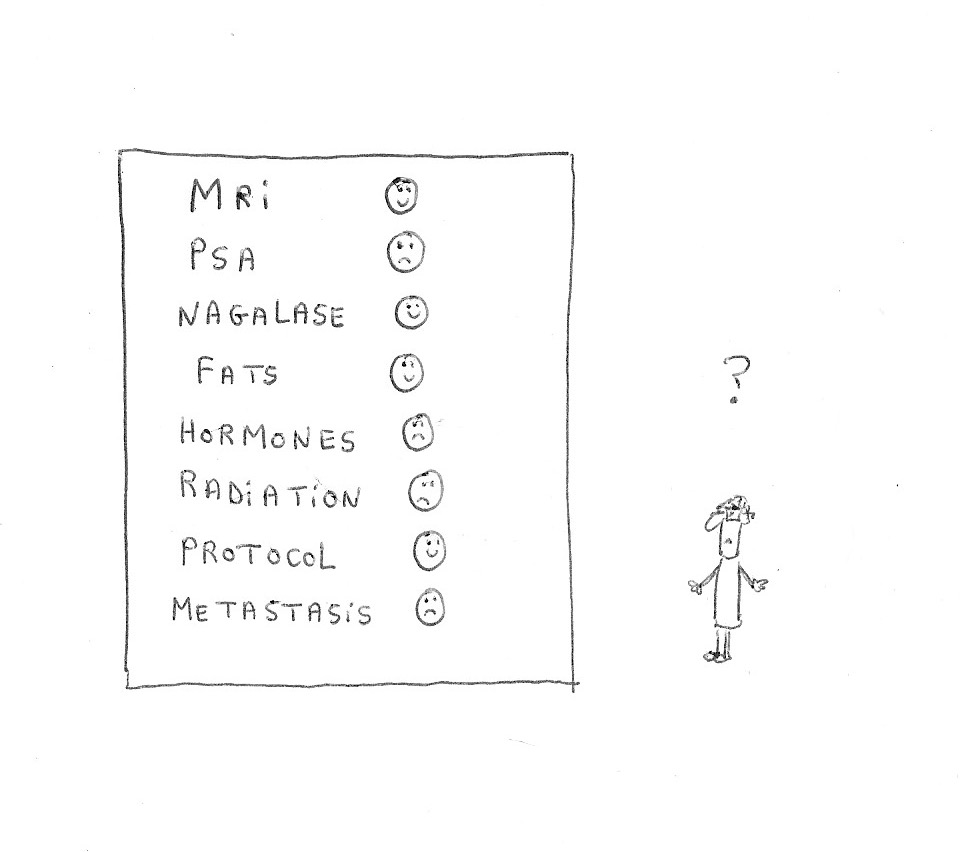
At the oncologist appointment in January I got my MRI results and later the accompanying report. The oncologist said the PSA indicated the cancer was still active - it had gone from 5.5 in November, 2.6 in December to 9.1 in January and 8.3 in February. His recommendation was to start hormone treatment immediately for three months then have a month of radiation; the concern, as always, is that waiting can lead to cancer metastasising. 

I haven’t yet started treatment and wanted to share why I am waiting until June and another PSA test. I am fully aware that for many this might seem foolhardy, stupid or naive to some. It is not a choice I take lightly and I have spent a considerable amount of time reviewing my situation and options. It is also not a choice I am suggesting others should take; we each have to find our own way and for me that isn’t necessarily accepting the road planned by the NHS doctors.

It is also not done without fear and concerns; am I really making the best choice? Here are some of the things I have considered in deciding to delay:

1. MRI says 'no change'


MRI Jan 2091
The report, which the oncologist was fairly dismissive of, says ’no change’ compared to my previous MRI eighteen months earlier. In fact when I got the report a couple of weeks later it stated that the prostate is smaller ie 40ml where previously it was 56ml (although the ultrasound showed 40ml first time around). There is also only one unchanged focus in the left lobe, whereas before others were seen plus no pelvic adenopathy (distortion of lymph nodes); there is also no regional lymph nodes metastasis compared with 9mm diameter pelvic node before. The caveat is that there was some blurring in the scan which interfered slightly with definition. So my ‘invasive’ and ‘aggressive’ cancer is probably smaller and certainly not bigger. The treatment in Germany, change of diet, supplement regime and all the other things I am doing must be working to some extent.

Interestingly when my cancer was first diagnosed I was given a T2a by the radiologist but then it was corrected to 'definiately' a T3a. Now the rating in January was given a T2b/T3a. It is clear that it is difficult to read accurately these tests - that's just the nature of the beast! I seem to be on the borderline between a serious and less serious cancer?

2. PSA climbing. 
I have already covered that the PSA is a poor indicator; even the doctor, Richard J. Albin, who created the PSA test says: "PSA testing can’t detect prostate cancer and, more important, it can’t distinguish between the two types of prostate cancer — the one that will kill you and the one that won’t (i)."

So what causes PSA to increase? Basically prostate cancer, benign prostate enlargement (BPH), and prostate inflammation (ii). Some of us have one or two or three of those and it is worth noting that inflammation is an environment that has been shown to encourage tumour growth. Prostate cancer, usually leads to the PSA going up and doesn’t go down unless there is some form of treatment. Apparently BPH is the same, but the increase may not be so steep. Lastly inflammation causes the PSA to go up with a flareup and down as the inflammation lessens. 

Dr Daniel George, Professor of Medicine and Professor in Surgery at Duke University (iii), notes that: “there is a strong correlation between a shorter PSA doubling time—a shorter time to bone metastasis—and shorter overall survival...If doubling time is a year or longer, these are slow-growing cancers.” 

In terms of my own PSA there are indications of increases but the PSA measure has fluctuated. Is this cancer or inflammation? There is also a link between inflammation and cell death; does that include cancer cells (iv)? I hope the next PSA will give a clearer picture as to whether my PSA is rising or not.


3. Gleason questions

I talked about biopsies and Gleason scoring in a previous blog. Elsewhere I note that many, including my doctors, consider a Gleason score of 7 as ‘aggressive’ and ‘invasive’. However the more I learn, the more there are questions. Gleason 6 for many years was treated with prostatectomy or radiation and hormones. Now Active Surveillance is more usually the order of the day and many of the ‘cancers' don’t develop further. In fact there are some doctors now, who argue that it doesn’t really behave like a cancer and could just be part of the ageing process.

Dr Bert Forstmann, while in a minority amongst doctors, writes that: "Only the 15 percent or so of high-grade/high-risk prostate cancers with significant amounts of pattern (grade) 4 and or 5 disease in their Gleason score require detection and treatment as only these types of prostate cancers are potentially deadly.” He then suggests that the "intermediate-risk Gleason 7 category actually includes two very differently behaving prostate cancers; the 3+4=7 and, the 4+3=7. Importantly however, whereas the 3+4 is a low-risk cancer and tends to behave like the bogus G6 especially when it has 10 percent or less of pattern 4 disease — although the exact amount of pattern 4 to be significant is yet to be determined, the 4+3 behaves more like the high-risk Gleason 4+4 and, should be considered for treatment” (v).

So could my Gleason 3+4 be similar to a Gleason 6 and be better considered for Active Surveillance? Or should we be concerned that this is an ‘invasive’ cancer?

Update 4/05/19: Just seen interesting video re Active Surveillance and Gleason scores - see here and another here outlining some of the risks.

4. Metastasis fears

Metastasis is what we all want to avoid! I totally get NHS doctors wanting to treat me early to avoid the cancer spreading as prognosis when it spreads is considerably poorer. Indeed doctors say that there is no systemic treatments that can cure metastatic prostate cancer (see here only if you really want to read about horrors of metastasis).


My limited understanding is that high-risk prostate cancer cells basically can’t thrive outside the prostatic environment, but at some point they undergo a genetic transition called epithelial-to-mesenchymal transition (EMT), after which they can freely move throughout the body in the lymph, blood or wherever and accumulate in distant locations. I think 80% of metastasis in prostate cancers go first to the bones; hence when diagnosed with prostate cancer many doctors call for a bone scan. My scan was clear. 

Sometimes those microscopic metastases can circulate for a long time before planting themselves somewhere new. Another common place is for them to accumulate in the lymph nodes. I found this video useful in looking at the lymph system differently from many medical doctors; arguing that we should detoxify and exercise to clean out the lymph system rather than perhaps cutting the lymphs out. See Robert Morse ND: https://youtu.be/ScxGrOB1z80 

Once metastasis have appeared, there are countless micromets that you can't see in organs, the blood, the lymph and bones. Once some of the mets are large enough to be detected, there are hundreds of thousands more that are too small to be detected by any current technology. I remember reading but can’t find the quote that treatment of metastases has been compared to weeding a garden; you basically keep pulling at the dandelions until there are no more. The person quoting this said that is wrong and a better metaphor would be like plucking mushrooms from under a tree. The fungus mycelium is everywhere, and plucking at the mushrooms doesn't stop it at all. So is it right to hit what you can’t see with, for example, radiation? 

The picture is confusing. Metastasis start very slowly. We also know that eliminating the largest mets reduces PSA; this means that after treatment, we can't use PSA progress to monitor effectiveness? What does hitting a met site mean to all those other circulating mets? Yet I totally understand wishes to hit the mets to feel more in control! I’m also aware that there are benefits to hitting weight-bearing bones, which the cancer will weaken over time to prevent fractures, spinal compression, and pain.

So is there a way to see if cancers are about to metastases? A PET scan might give some indications but are not available on NHS for many of us; it also costs close to £2,000. I’ve also come across a number of tests in the alternative and complimentary world, like RGCC or Greek test but again that is close to £2,000. 

Two tests that I have done, do give some reassurances that my cancer is not metastasising:

(a) High levels of LDL and Triglyceride. Chris Woollams of CancerActive writes: "I have long noted that where prostate cancer patients send me their blood results (PSA, estradiol, oestrone, testosterone, DHT, triglyceride and cholesterol levels), as soon as the triglyceride and cholesterol levels climb, the DHT is not far behind and the cancer is coming back with a vengeance. Research supports this with a big US study showing people with higher levels of blood fat have more metastases and lowered survival times”. In January a test with my GP showed that my triglycerides were the lower end of the normal range and cholesterol has come down since being on my nutrition programme. This hopefully indicates no metastasis.


(b) Nagalase. Nagalase, full name N-acetyl-Galactosaminidase, is an enzyme in the body that helps break down sugar. A company in Stroud coordinates tests for nagalase levels in the body which are considered to help monitoring the effect of therapy in cancer and certain viral infections, including HIV infection (vi). When levels are normal, then that indicates health and the chances of developing cancer are relatively low. However, if higher that means increased tumour cell activity in your body. This is considered a harbinger for cancer. Nagalase levels can also increase in other diseases like viral infections, but this increase has mostly been described for cancer.

The GcMAFplus website writes: “...the amount of nagalase activity in the body corresponds directly to the number of cancer cells in the body as well as tumour size and amount of cancer within the body. It has been demonstrated that by measuring levels of nagalase in the bloodstream it is possible to detect the presence of cancerous lesions well below levels achievable by any other diagnostic means...In summary – Nagalase is an amazingly sensitive marker for each and every type of cancer and allows for the much earlier detection of cancerous lesions than any other known method. It causes immunodeficiency by blocking the development of macrophage activating factor and consecutive nagalase testing is a reliable indicator for tracking the effectiveness of therapeutic regimens for all cancers and  certain viral infections (vii).”

My nagalase test result came back mostly normal although one marker was below normal. That has led to an interesting look at why that might be. A further test looking at Genomic DNA from leucocytes found p-dichlorobenzene. This is a pesticide linked to cancer, specifically prostate cancer. Is this a cause or part cause of my cancer? I'm not so sure but certainbly could be a factor? That is yet another blog! Anyhow my nagalase test is another indication of no metastasis. Update 17.05.19: Interesting report looking at why Nagalase test may not be that useful: https://selfhacked.com/blog/nagalase/

5.  Current protocol

Well I’ll save the outline of this for another blog in this series, but I want to give the protocol a longer time to further impact on the cancer. As noted previously I had transurethral hyperthermia in Germany followed by six months of hormones that finished last summer. Since last Christmas I am on a new protocol which includes diet and a range of supplements; these have been recommended following a series of blood tests to enhance my immune system and also hopefully impact on the cancer. Update 5/04/19: see protocol here.

6. NHS Treatment

I want to cover some of my first thoughts regarding the hormone and radiation treatment being offered to me by the NHS. They are big serious treatments and not at all straightforward - and of course don't necessarilly get at teh cause of cancer. So concerns about them also lead to me wanting to see if the protocol I am undertaking will further reduce my tumour. I’ll save these for the next two blogs. Update 4/04/19: see more re hormones here and more re radiotherapy here.

Lastly I have been faced with a number of family challenges with the death of my father and my partners father and my mum having a very serious operation. All this and a number of other challenges hasn’t left me with much headspace to plan and also left me reluctant to start treatments that cause so much fatigue and impact on the body.

Notes:

(i) https://healthbeatblog.com/2010/03/the-doctor-who-invented-psa-test-calls-it-a-profitdriven-public-health-disaster-why-this-is-good-new/
(ii) See more re inflammation: https://www.pcf.org/c/infection-and-prostate-cancer/?fbclid=IwAR2eLHmRaf378Nklc2l1I0C5x5SchmBDEDMuXr1wh63nmHVrwpnVtbyzYX4
(iii) https://www.prostatepedia.net/blogs/prostatepedia/dr-daniel-george-on-psa-recurrence?goal=0_bc8795358a-d7cb05f7bc-199204941&mc_cid=d7cb05f7bc&mc_eid=e7e7fa69da 
(iv) https://mmrjournal.biomedcentral.com/track/pdf/10.1186/s40779-015-0039-0 
(v) https://medium.com/@bvorstman/is-psa-testing-for-prostate-cancer-bad-health-advice-7199618e56c5?fbclid=IwAR1vufT01HSsN-ShZR5KX-d7cCnVw1KkhgRqvpI4UoMtclTXav7vNGwzz9E 
(vi) https://www.invivoclinical.co.uk/products---services/Lab-Diagnostics/Nagalase-Activity
(vii) https://www.gcmafplus.com/about/articles/what-nagalase-how-does-it-affect-cancer
See small study with patients who have prostate cancer: https://www.ncbi.nlm.nih.gov/pmc/articles/PMC2510818/

Saturday, 23 March 2019

No to a radical prostatectomy

Me; August 2017!
I have struggled to find time for this blog so have not managed to cover my current protocol, however in this blog I want to share my current thinking regarding my treatment - in this first part why I said no to a radical prostatectomy - that of course doesn’t mean I would say no to all surgery in the future or that anyone reading this should also necessarily dismiss surgery.

Before Christmas I was informed by my surgeon that the NHS would not operate on my prostate. It is my understanding that the two reasons given for this were:
1. that the transuretheral hyperthermia I had in November 2017 could have caused scarring making an operation more difficult and was 'very unlikely to have had any impact on the cancer'. I am told by others who use this hyperthermia that scarring is extremely unlikely. 
2. that the position of my tumour (ie where it was 'pressing on the edge of the capsule’) meant it was likely to be less successful and serious long-term side-effects would be more likely. However, this was the case when I was offered an operation in September 2017 so why this reason now?And this was before the second MRI results had come in.

I was told a second opinion would be pointless as they would also agree with this view that an operation was not suitable. It was a strange feeling to be ‘denied’ an operation - even though I had almost, by then, decided against one! I felt slightly cheated. I had researched the surgeon and knew he was experienced and had good results. Anyhow that left me waiting to see the oncologist. I was initially told this would be before Christmas but my appointments were cancelled three times and I didn’t get to see the oncologist until mid-January. The next blog will cover the story from there. In this blog I wanted to share some of my thoughts that led me to saying no to surgery and feeling that was the correct choice for me.

Interestingly my first choice back in September 2017 when I was diagnosed, was for surgery. 'Let’s cut it out and get rid of it’ was my first thought. I welcome my naturopath not saying ‘yes' or ‘no' but saying how important it was to give myself time to decide. Slowly I came to think that radiation or an another treatment might be more suited to me - my intuition at work? I also met a number of people who had had various treatments; in terms of the operation, some have been happy and some have shared that it was not at all an easy journey. Of course, none of this is an ‘easy journey’ whatever path we take!

Pavement at Penny Brohn
Strong reactions!
Radical prostatectomy seems to provoke very strong reactions amongst many folk with cancer. There are those who consider that an operation is the best way to remove the primary tumour and those who actively campaign against it.

The operation I might have had was a keyhole robotic radical prostatectomy to remove the prostate gland and tissues surrounding it. This usually includes the seminal vesicles and some nearby lymph nodes. A surgeon operates a robot and enters in six places; it can take several hours and sometimes they also need to cut into the belly to remove the prostate. It is, after all, in a very difficult position and one nurse told me that it was considered one of the most complicated regular cancer operations. However, doctors consider that a radical prostatectomy can cure prostate cancer in men whose cancer is limited to the prostate. You can see what a radical prostatectomy entails here (i).

One of the challenges regarding this operation is that it was used, and in some areas is still used today, to remove prostates in early cancers where there is not strong evidence that the cancer would cause problems. It is worth noting that the research shows that surgery for men with localized prostate cancer does not reduce the risk of mortality over 20 years; mortality is similar for prostatectomy and observation for early prostate cancer (ii). 

Some groups are very strongly against surgery. For example see the Facebook group looking at Non Surgical treatments (iii). They have some good general info around support for prostate cancer and clearly state that they are 'are biased’ about surgery for prostate cancer. Indeed they write that ‘defending or supporting surgery will get you removed from the group’!

Another example of those against surgery is Dr Bert Vorstman, who has written colourfully criticising a lot of the current practice including claiming the FDA approval for robotic devices in the States was ‘bogus’. He writes very strongly on this issue (iv) and some of what he writes is clearly not related to the NHS where experiences are different. However just last month I read an article about the robotic machines and how the FDA have now issued a warning about their use in some operations. As far as I can understand this again doesn’t apply to how the UK do the surgery (v)?

Update 4/06/19: See here for 'Maker of $1.5 Million Surgical Robot Hid More Than 700 Injury Claims'.
Update 17.2.23: less impact from radiotherapy than surgery in terms of urinary and sexual side effects - see here: https://www.icr.ac.uk/news-archive%2Furinary-and-sexual-side-effects-less-likely-after-advanced-radiotherapy-than-surgery-for-advanced-prostate-cancer-patients?utm_medium=email&utm_source=rasa_io&utm_campaign=newsletter

So while I take the strong views about prostatectomy with a pinch of salt I do have concerns and questions:

1. To what extent does the operation lead to more inflammation and regeneration of wounded tissue? Of course we need this in terms of healing but maybe not in terms of cancer as they maybe circulating and waking up dormant cells? Can surgery increase the risk of metastasis? See some useful links re this particularly CancerActive (vi). See also my blog here about biopsies which raise a similar issue (vii). It does seem to my totally unqualified eyes that it must be something of a risk to be removing a cancerous prostate in such a complicated operation, not just in leaving some behind some of the cancer cells but also in spreading the cells? There is some evidence to suggest this may be a problem, but some interesting recent research is considering whether anti-inflammatory drugs prior to surgery might be part of the answer? See for example this 30 min film re lung cancer here (viii).

2. Which is better; radiation or surgery? For my age and cancer, the numbers reaching ten years survival in the NHS for radiotherapy and operation are almost exactly the same. Of course if you have radiation you can’t then have it again, but I have heard some argue the side-effects of the operation are a greater risk than those having radiation? Interestingly I came across a fairly recent bit of research that suggests that there is superior metastasis-free survival for patients with high-risk prostate cancer treated with definitive radiation therapy compared to radical prostatectomy. However they also note overall survival was not different (ix).

3. Side-effects? Of course these are many and reported in the literature including infections after the surgery, depression and more but the four big ones that concerned me were:

Urinary incontinence and leakage: I understand this usually improves in the year after surgery, but many are left wearing pads and a small number face further very difficult procedures and operations. In one report in the US I read you are considered dry if you only use 1-2 pads per day??!

Erection problems/impotence: recovery can take up to two years after surgery and may not be complete. Nerve-sparing prostatectomy lessens the chance of impotence, but doesn't guarantee that it won't happen. In my case I was told it would not be possible to spare the nerves. Some are left unable to ejaculate. I read recently that Southmead Hospital are looking at a new technique that might help (x).

Lymphedema: this is where fluid accumulates in the soft tissues and results in swelling. Sometimes it is found in the operation that it is necessary to remove lymph nodes; there are of course measures that can help in treating the effects of lymphedema.

Death: surgery is one of the only treatments with a small but significant risk of death (xi). 

Of course a further aspect is whether more treatment is needed after surgery; sometimes this is hormones and sometimes it could be 'salvage' radiotherapy. I’d love comments/feedback if you don’t agree - or do agree - as noted before we all have to find our own way with treatment. We have to take our own situations and knowledge about our cancers into consideration.

Update 3/06/19: If you are thinking of surgery here is a great site looking at things you can do to help prepare: https://www.canceractive.com/article/how-to%20prepare%20for%20cancer%20surgery%20naturally

Friday, 1 March 2019

Fear; part one ‘Is there more fear?'

While staying with family in Bergen earlier this month, I was fortunate to catch the International Literary Festival there. One of the talks that took my interest was entitled, ‘World Anxiety’ with the subtitle 'Migration, economic insecurity, terrorism and climate disaster - what if it was not these threats, but anxiety about them, which defines our times?' It was by Heinz Bude, a sociologist and author of ’Society of Fear’ and ’The Mood of the World’ and you can see my short interview with him below.

I so agree that fear and anxieties have seeped even more into so much of our news, communities, politics and indeed the whole World. Our society seems evermore to have unstable foundations. Our future prospects seem evermore uncertain. Fear is so much apart of life and different in different societies, but why the increase and how can we manage it? This topic also resonated, as I have been managing my own fears around the cancer diagnosis and treatment and can see how dangerous it can be to let fear run away with us. 

Having studied sociology many years ago, it was very refreshing and even fun, to be back exploring some of the roots of the fears. Our societies seem to be moving away from the idea of safety nets to the onus being on individuals to find their own way. Traditional expectations of a good life bump up against realities.

Heinz Bude
In ’Society of Fear’ Heinz writes that “Our entire lives seem to be on the line at every single moment. The fear of simply drifting through life is hard to bear.” The middle classes feel increasingly precarious, while the ‘lower rungs’ of our society feel even more powerless. Heinz talked about the 'suppressed anger' and 'quiet resentment’ he found in many societies and how our young are living with fears of missing out and failing to maximise opportunities. So many of us live with uncertain paths whether it be education, employment, housing or relationships. We seem to increasingly blame ourselves for not doing better; there are unlimited possibilities to grow and at each choice we fear missing out.

Our social media, while bringing benefits, is clearly also having a significant negative impact on many lives. So many of us are constantly measuring ourselves against each others glossy unrealistic instagramed lives. The more you use social networks, the more likely you are to see that someone is having more fun than you are right now. Fail and you become a loser. Can we keep up with it all? 

I remember reading that those who live in countries with almost full employment fear losing their jobs the most. Indeed the more successful societies are, then the higher the fear; the more we own the more there is to fear losing wealth or status. Heinz shows how fear is not coming from some ′powerful other′ but rather from the endless range of opportunities and possibilities which we face. Our world could implode at any moment. Social democracy is collapsing. We can’t stop climate change or terrorists or a banking disaster or avian flu or cancer. We’ve had this assumption that the world is getting better. However many are now asking, what if the worst is yet to come? 

How can we learn to live with fear, cope with it, manage it? Heinz says we need to accept fear as an element of existence; beware of those who say we can get rid of it.Step one seems to me, to be about recognising it and so I am grateful for Heinz Bude’s analysis that I’ve only been able to lightly touch in this blog (do read his books). Cancer is part of my fears at times but I can see there is other stuff that Heinz has identified that is also contributing to fear. Part two of this blog is coming soon and will explore this more.
More info:
International Literary Festival: https://www.littfestbergen.no/en/

Saturday, 2 February 2019

The mystery of fats and oils

Cartoon by Russ
Wow, this is an area that I have found so hard to understand and not sure this blog will shed much more light on it. Indeed whether it be margarine, butter, coconut or olive oil we have been told at various times they are bad and good for us. There are whole books dedicated to this topic….there is so much conflicting information out there - well isn’t that true for lots of this health stuff! Anyway, where to begin? 

Well, last week I had the results of a comprehensive blood test with my integrative doctor looking at my ‘Ethythrocyte Essential Fatty Acids’. It gave numbers for a bewildering thirty plus different Fatty Acids. On top of that there seem to be so many generalizations about saturated, monounsaturated and polyunsaturated fatty acids, but each fat is unique and I understand that even the smallest variation can have significant effects in the body.

I’ve learnt that prostate cancer likes fat as well as sugar (see previous blog with Jane McLelland here). Last year research confirmed that fat contained within the Western diet, in combination with genetic factors, can cause prostate cancer tumors to spread (i). Previously there had also been research showing saturated fat, Alpha-linolenic acid (ALA) and Eicosatetraenoic acid (EPA) intakes were related to the risk of advanced or fatal prostate cancer, but not to non-advanced prostate cancer (ii). However there are still some significant question marks over the research. For example could those saturated fats contain more pesticides - and what do we mean by ‘fats’ in the research. Nevertheless some scientists argue that diets high in omega-6 fatty acids relative to omega-3 fatty acids may be associated with the increased prevalence of chronic diseases, like certain cancers.

Dr Geo Espinosa (iii) for example writes: "There is no conclusive association between eating fat, including saturated fat and prostate cancer. However, there are two possible exceptions, too much Omega 6-fatty acids and consumption of trans-fatty acids. Omega 6 fats are good for the body but only when in the balance with Omega-3 fatty acids. The omega-6 to omega-3 ratio in the standard American (heart attack) diet is 20 or 30:1, omega 6 to omega 3. The healthier ratio is 2 or 1:1, respectively.”

I like how Chris Woollams of CANCER Active (iv) summarises it: “Omega-3 is far more beneficial than 6 and 9. And the omega-3 from fish has completely different benefits (anti-inflammatory, longevity, brain health, cachexia minimisation) to that of flaxseed (toxin elimination, antioxidant, anti-oestrogen). And there is little conversion between the two - you need to eat both."

Interestingly my Omega 6 was the higher end of normal and my omega 3 was the lower end of normal. This is one area I can clearly take action; the suggestion being to balance this is by having 2gms of Cleanmarine supplement per day and increase eating walnuts and pumpkin seeds. I’ve already started this. It is also worth noting I am avoiding fish oils as there are a lot of mixed messages about them even particularly the cheaper ones. Update 19.02.19: See useful discussion re fats and prostate cancer here. Update 7.3.19: See great talk by Dr Mason about saturated fats and Omega 3 here (it is the third film in the article - not cancer specific so doesn't take account of issues noted above but nevertheless improved my understanding of this issue).

Two mysteries and two delights


There were a couple of other mysteries in my results. One was raised levels of trans-fats. These are the partially hydrogenated oils; basically an industrially created unsaturated fat. Since trans structured fats are unnatural, eating them causes chaos in the body including hardening of blood vessels and increased inflammation. I’ve looked several times at what I am eating and can find no foods with trans fats. Update 18.02.19: talking with an integrative doctor I hear that cooking olive oil can change the fat and could be responsible for this change? I rarely fry with olive oil but certainly have done.

The second mystery was that my Alpha-linolenic acid (ALA) reading was low and should indicate a low Docosahexaenoic acid (DHA) reading and it didn’t? Of course blood cells live for around 120 days so could this reading have something left over from a while ago? I don’t think so.

In my recent NHS blood tests I was delighted to see my cholesterol level, that in previous years had been just over the top end of normal, had come down (note cholestrol is not all bad). I was also delighted to see my triglyceride levels were at the lower end of normal. Chris Woollams writes (v): "A number of studies have shown that high levels of triglycerides in the blood are linked to lower survival times. We have covered research, for example, on the link between blood triglyceride levels and prostate cancer resurgence. Some oncologists in London have already been using complementary treatment statins in small doses to reduce plasma levels of bad fats.” This of course links again to Jane McLelland work re starving cancer.

Stearic and oleic acid


Another area of interest in my blood test results was the relation between stearic and oleic acid. The body converts excess stearic acid to oleic acid. In fact it can also convert the other way; the body has its own ideas about the various fatty acids it needs, and can create most of them. The exceptions are the omega-6 and omega-3 fatty acids, mentioned above, where we do have control.

It is argued by some scientists that in many cancers, the ratio of oleic:stearic acid increases with the severity of the cancer (vi). This seems to indicate that oleic acid is not a useful addition to the diet when one has prostate cancer; it can help make blood cells pliable but in that process could help cancer cells migrate. Some research from 1990 concluded (vii): 'The red cell membrane stearic acid to oleic acid ratio was analysed in 34 men with histologically proven carcinoma of the prostate and distant metastases. This ratio was expressed as the saturation index (SI). A mean SI of 0.97 was found in control patients without evidence of any malignancy whereas all patients with advanced prostatic cancer showed a reduced stearic to oleic acid ratio (mean SI 0.466). Untreated patients had a significantly lower SI (mean 0.36) than those who had responded to hormonal therapy (mean 0.547; P less than 0.0001). A drop in SI correlated well with more advanced disease as judged by radiological findings and serum PSA. It is suggested that red cell membrane SI correlates well with radiological and biochemical markers of advanced prostatic carcinoma and may be used as a marker to assess progress and response to treatment.'

Calculating my SI meant taking the stearic acid result and dividing it by the oleic acid ie in my case 0.87; but how much store should I place in this? Confusion for me multiplied when I realised that oleic acid is found in wonderful oils like olive oil, extolled for its health-giving properties and in less good oils like the vegetable oils. While stearic acid is a fat found in red meat and has been vilified for many years. Before I panicked it is also argued that an oleic-dominant ratio is seemingly an artifact of the cancer and probably unrelated to diet. 

So I will continue with some minimal olive oil, add more omega 3, maybe very occasionally have a bit of butter from grass-fed cattle and place my trust in the research that shows a Rainbow (viii) or Mediterranean Diet (ix) can play a key role in tackling cancer. More of my nutrition in another blog. 

Coconut oil


To finish I wanted to look at coconut oil as it was once feted as an oil to include in diets and is also a key oil in the Keto Diets that claim to help tackle cancer (x). Well more on Keto in another post but alot of what I’ve read to date raises concerns for me about that approach for prostate cancer (although there maybe some exceptions depending on the type of Keto Diet). Anyway June 2017 saw a report saying coconut oil increases LDL, or “bad” cholesterol - but the news was confusing as it also can raise HDL, or “good” cholesterol levels (xi). For me, on balance, there is still not enough research showing impacts of this oil and there is enough evidence with it being a saturated fat to raise concerns for those of us with breast or prostate cancers (xii). I will sadly be cutting this largely from my diet.

So loads more I could write on this but must stop now.

Update 15/014/19: This link is a great look with video at general health and fats here.

Update 14/05/21: research re prostate cancer and fats: https://medicalxpress.com/news/2019-11-high-fat-diet-proven-fuel-prostate.html

Update 1st July 2022: interesting new research on how oxygen and fats work together: https://ecancer.org/en/news/22003-study-shows-why-many-cancer-cells-need-to-import-fat

This blog also appeared on the Yes to Life website: https://yestolife.org.uk/blog/the-mystery-of-fats-and-oils-philip-booth/

Notes

(i) https://www.medicalnewstoday.com/articles/320617.php
(ii) https://www.ncbi.nlm.nih.gov/pmc/articles/PMC4129658/
(iii) https://todayspractitioner.com/news-commentary/no-connection-between-high-fat-diets-and-prostate-cancer/#.XFAx5Pzgq7N
(iv) https://www.canceractive.com/article/omega-3-fish-oils-krill-oil-flaxseed-and-cancer
(v) https://www.canceractive.com/article/metastases-increases-the-higher-your-bad-blood-fat-levels-1557
(vi) https://healthunlocked.com/advanced-prostate-cancer/posts/135436850/foods-supplements-vitamins-fats-1-oleic-stearic-acids-%E2%80%93-olive-oil-animal-fat
https://healthunlocked.com/advanced-prostate-cancer/posts/137114521/fat.
(vii) https://www.ncbi.nlm.nih.gov/pubmed/2337746
(viii) https://www.canceractive.com/article/adherence-to-mediterranean-diet-reduces-cancer-risk-increases-survival
https://www.canceractive.com/category/Rainbow-Diet-Research-Centrelatest-news
(ix) https://prostate.net/articles/what-are-the-benefits-of-the-mediterranean-diet/

Tuesday, 29 January 2019

Meeting Jan Beute: Hydrogen, Auto-Haemotherapy and PEMF


Well I had a fascinating hour in Bristol yesterday with Jan Beute; you can catch my 3 minute interview below. Among the treatments he uses to support immune systems are Hydrogen and Auto-Haemotherapy (which he mentions in the film) plus Pulsed Electromagnetic Field Therapy (PEMF). All of these I had read about but not experienced. Jan recommends these treatments every week so I now need to consider if this is a route I want to explore further.

I found Jan to be a man passionate about healing and finding ways to support people with chronic illnesses. I like how he is trying to find cheaper ways to enable the treatments he uses to be more readily available to people. Apparently he ran a workshop last summer for Back2Health at Penny Brohn where he demonstrated how to make inexpensive molecular hydrogen 'shots'. Jan also has had a controversial history of challenging the medical establishment over the best ways to treat patients; in particular his use of DMSO in the past. The medical establishment say there is little or no benefit using this drug while others have seen benefits when used, for example, with chemotherapy drugs (i).

Hydrogen is the mainstay of Jan’s treatments. Molecular hydrogen which has the ability to repair the mitochondria also provides impressive anti-oxidant potential to the body, massively reduces inflammation and allows cellular repair. Jan sees ’the struggle for life is to saturate our bodies with hydrogen’ and that this will then tackle any disease ‘ravaging up to 90% of all your free radicals.’ And there are indeed quite a number of papers indicating hydrogen’s promising impact on cancer (ii); suppressing cancer cell growth, inducing cancer cell apoptosis (but not normal cell apoptosis), preventing genetic mutations and protecting healthy cells from anticancer drugs.

The second treatment was Auto-Haemotherapy (stem cells), used since 1912, which involves taking about 20cl of blood and then injecting it back into the patient’s muscle tissue a short time after. The muscle could be buttocks or even facial muscles. I understand that the body sees the incoming blood as a substance that needs to be got rid of and tells the bone marrow to increase its production of macrophages. These macrophages are a type of white blood cells that are every day responsible for destroying bacteria, viruses and even cancer cells. The blood usually contains 5% macrophages, but after a treatment, this quadruples to 22% and remains at that level for the next few days. This significant immune boost attacks most foreign bodies in the blood and can be powerful intervention to tackle an illness. 

The third treatment I tried, at the same time as the others, was PEMF; this is non-invasive, safe and can be used with other treatments with no risk of toxicity. There are quite a number of animal studies and some studies with people but more work is needed (iii). PEMF uses pulsed electromagnetic fields which are delivered to the body with the aim to increase energy in the cells (iv). I sat on a plastic circular cable that gave out pulsed, almost mini-electric shocks, that were not uncomfortable - but not pleasurable! 

I will no doubt return to some of these treatments in this blog if I pursue them. One Wigwam colleague is already a regular user and her initial experience has been very positive, but as we’ve said before one persons’ experience should not be what we base our choices on!

You can read more from Jan about hydrogen and PEMF at: http://rejuvanology.co.uk/wp-content/uploads/2018/01/REJUVENATE-YOUR-CELL1.pdf

Jan's number is 0784 890580 and you can contact Fiona who set up the treatment sessions in Bristol on info(at)natureworx.com

Notes

Reduce nightly visits to loo

One of the challenges of prostate problems plus taking hormones can be the many trips to urinate at night. Indeed it is accepted by many tha...